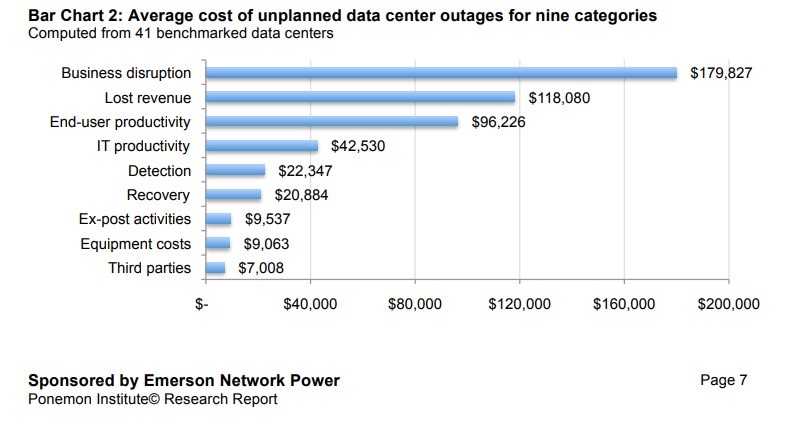
Source: Cost of Data Center Outages WP FINAL 2 (ponemon.org)
Discover the secret to banking infrastructure success in this blog post.
Learn about 5 common pain points & how to fix them. Prevent costly downtime & improve systems performance with regular infrastructure reviews.
Best practices for large enterprises in the African banking industry. Stay ahead of the curve, protect data, save money, & stay competitive.
5 Common Infrastructure Pain Points and How to Fix Them
Banks use technology a lot. It’s important to keep their systems working well. Sometimes, problems happen. Here are 5 common problems and ways to fix them:
- Scalability: When a business grows, their systems need to grow too. A cloud-based system can help with this.
- Downtime: When systems are down, it costs the business money and time. A disaster recovery plan to fix problems quickly can help.
- Security: Hackers try to break into systems. A security information and event management (SIEM) system can help detect and stop them.
- Complexity: As systems get more advanced, it can be hard to manage them. A simpler system, preferably on the cloud, can make this easier.
- Cost: It’s expensive to maintain and upgrade systems. A pay-as-you-go system can save money.
By fixing these problems, a business can make their systems work better and make more money.
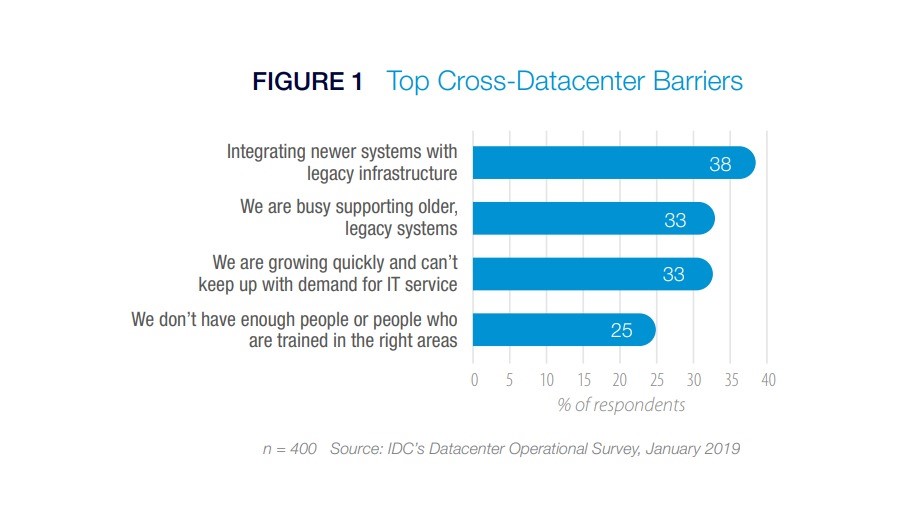
Source : The Business Value of Hybrid Cloud with VMware
References:
- “The Cost of Downtime” by the Ponemon Institute, Cost of Data Center Outages WP FINAL 2 (ponemon.org)
- “The Business Value of the Connected Cloud” by IDC and VMWare,
Prevent Problems: The Importance of Regular Infrastructure Reviews
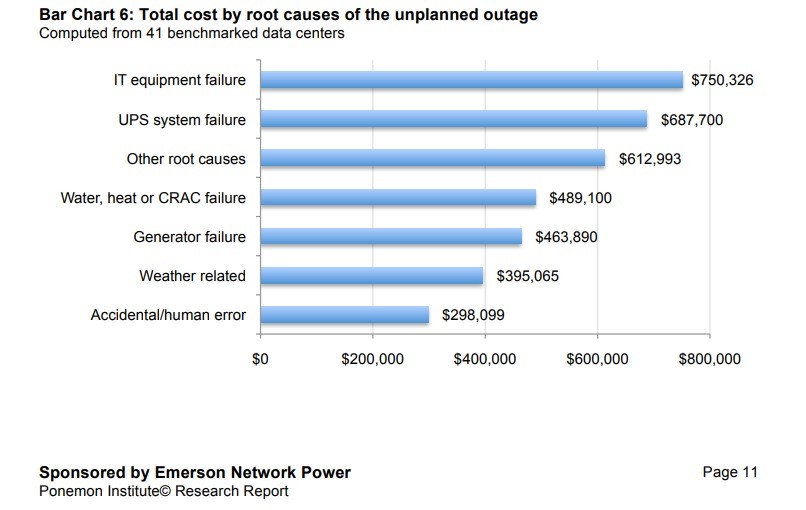
Source: Cost of Data Center Outages WP FINAL 2 (ponemon.org)
Imagine saving money, protecting systems and data, and staying competitive all at once. Regular infrastructure reviews make this a reality. These reviews test the security, scalability, and health of your systems. They also identify and address potential issues before they become major problems.
Don’t let costly downtime and repairs hold you back. A study by the Ponemon Institute found that the average cost of unplanned downtime is $5,600 per minute. Regular infrastructure reviews help identify and address issues early on.
Cybersecurity threats are evolving, leaving your business vulnerable to attacks. Reviews identify vulnerabilities and install best practices to protect your systems and data.
Stay ahead of the curve with regular infrastructure reviews. As technology advances, it’s important to meet the demands of your customers. These reviews identify improvements and help you stay competitive in the market.
Unlock the hidden potential of your banking infrastructure with regular reviews. Protect your systems and data, save money, and stay competitive in the market all at once.
Infrastructure Review Best Practices for Large Enterprises
Conducting regular infrastructure reviews is crucial for large enterprises in the banking industry. As more banks adopt technology, there is a need for a robust and reliable infrastructure.
In this section, let’s look at some best practices for conducting infrastructure reviews. Especially for large enterprises in the African banking industry.
- Regular Audits: Banks should conduct annual regular infrastructure reviews. These reviews ensure systems’ security, performance, and availability.
- Risk Assessment: Conduct a risk assessment as part of the review process. Identify potential vulnerabilities and the likelihood of exploitation. This will focus on and address the most critical issues.
- Compliance: Banks adhere to various regulations such as (CBN Central Bank of Nigeria). For example, the CBN’s guidelines on Cybersecurity in the Nigerian banking industry. Hence, infrastructure reviews should have a compliance check to meet all regulatory requirements.
- Automation: Consider implementing automation in the infrastructure review process. Automation reduces human error, improves monitoring, and allows response to issues faster.
- Stakeholder involvement: Involve stakeholders from different departments of the bank. This will ensure consideration for all needs and tailor the solutions.
- Test Disaster recovery plans: Test disaster recovery plans. Test them at least and update them as necessary. This will ensure that the bank can recover from any disruptions.
References:
- The Central Bank of Nigeria (CBN) guidelines on Cybersecurity in the Nigerian banking industry”
- The Importance of Regular IT Audits for Banks” by the Association of Chartered Accountants.
How to Conduct a Successful Infrastructure Audit

Source: Image by Tumisu from Pixabay
A successful infrastructure audit is crucial ensures safety and security of customers’ data and transactions. Here’s a step-by-step procedure for conducting an infrastructure audit:
- Plan audit process, including objectives, scope, and team members.
- Assess risks to identify vulnerabilities and prioritize issues.
- Collect data on current infrastructure to identify weaknesses.
- Ensure compliance with regulations like CBN’s Cybersecurity guidelines.
- Test systems, including disaster recovery and network connectivity.
- Report findings and recommendations for improvement.
- Implement changes to improve infrastructure.
- Regularly monitor and review infrastructure to ensure efficiency and security.
Regular audits ensure safety and security of customer data and compliance with regulations in African banking industry.
Infrastructure as Code: A Review of the Pros and Cons

Source: Image by Dirk Wouters from Pixabay
Infrastructure as code (IAC) provides and manages IT through the use of code. This approach allows for automation, consistency, and repeatability in the management of infrastructure. While IAC has many benefits, it also has its drawbacks and may not be the best fit for every organization.
In this section, let’s look at the pros and cons of IAC. Also, examples of organizations from the African continent that have implemented this approach.
Pros:
- Automation: IAC allows for automation in management and deployment. This saves time and reduces errors.
- Consistency: By using code to manage infrastructure, organizations ensure consistency, which improves reliability.
- Version control: IAC tracks changes to their infrastructure. As a result, they roll back to previous versions if necessary.
- Scalability: Organizations scale their infrastructure with IAC. This is essential for organizations that are growing or experiencing increased demand.
Cons:
- Complexity: IAC is complex. Hence it requires a high level of technical expertise to deploy and maintain.
- Learning curve: Organizations need to invest time and resources in training employees. Both on how to use IAC tools and best practices.
- Limited flexibility: IAC may not serve organizations needing flexibility in their infrastructure.
Examples of African organizations that have implemented IAC include:
- Standard Bank of South Africa: Standard Bank is one of the largest banks in Africa. They have implemented IAC to manage their infrastructure. This enabled them to automate their infrastructure availability and increase their reliability.
- Safaricom: Safaricom is a leading mobile network operator in Kenya. They have implemented IAC to manage their infrastructure. This move has enabled them to scale their infrastructure.
- MTN: MTN is one of the largest telecommunications companies in Africa. They implemented IAC to manage their infrastructure. They automated their infrastructure and increase the reliability of their systems.
If organizations have technical expertise and willing to invest in training. IAC can bring significant benefits such as automation, consistency, and scalability.
References:
- “Infrastructure as Code: Managing Servers in the Cloud” by O’Reilly Media,
- “Infrastructure as Code: The Future of IT Operations” by Gartner Research,
Infrastructure in the Cloud: A Review of the Leading Platforms
The use of cloud computing is growing in Africa, as it offers scalable and flexible infrastructure without the need for expensive hardware.
The leading cloud platforms in Africa are:
- Amazon Web Services (AWS), known for its scalability and security, used by Standard Bank, Jumia, and Andela.
- Microsoft Azure, known for security and compliance, used by MTN, UBA, and Ecobank.
- Google Cloud Platform (GCP), known for scalability and performance, used by Safaricom, Cell C, and Union Bank.
- Alibaba Cloud, a Chinese provider known for scalability and security.
When choosing a cloud platform, consider your organization’s specific needs, the region’s support and expertise, and the pricing model.
Standard Bank of South Africa is an example of a successful cloud implementation, improving scalability and efficiency.
Consider your organization’s needs when choosing a cloud platform from the leading providers: AWS, Azure, GCP, and Alibaba Cloud.
References:
- “The State of Cloud in Africa” by Data Center Dynamics,
- “The Future of Cloud Computing in Africa” by The Next Web,
- “Standard Bank: Scaling infrastructure with AWS” by Amazon Web Services,
The Role of Automation in Streamlining Infrastructure Reviews
Banking in Africa gets a boost from automation. By using tech like Robotic Process Automation (RPA) and Artificial Intelligence (AI), banks can streamline their processes, save money, and enhance customer satisfaction.
One success story is First National Bank (FNB) in South Africa. They automated account opening and loan review with RPA, cutting processing time and increasing accuracy.
They’ve also used AI to better manage risk. The results? Lower costs, better efficiency, and happy customers. In 2020, FNB reported a 25% decrease in operational costs, 20% efficiency increase, and 10% rise in customer satisfaction.
Banking’s Future in Africa: Monitor & Automate for Success
African banks are ramping up tech investments to streamline operations, reduce costs and enhance customer experience. Key players are adopting Robotic Process Automation (RPA) and Artificial Intelligence (AI) to automate repetitive tasks, analyze customer data and mitigate risks.
Real-time data monitoring allows banks to make informed decisions and quickly identify opportunities or challenges. The results speak for themselves: banks adopting these technologies see reduced costs, increased efficiency and improved customer satisfaction
Disaster Recovery Planning: A Key Element of Infrastructure Review

Source: Image by Steve Buissinne from Pixabay
Disaster recovery planning (DRP) is crucial for banks in disaster-prone Africa. For example, a study by the International Journal of Information Management found that the average cost of a data center outage for a bank can be as high as $5 million.
Additionally, a survey conducted by the Federal Reserve found that 60% of small businesses that do not have a disaster recovery plan go out of business within six months of a disaster.
Banks should have a comprehensive DRP that addresses potential threats and outlines procedures for restoring operations. Measures such as regular backups, testing, and backup sites/mobile units help mitigate risks.
Standard Bank Group and Kenya Commercial Bank have implemented DRP with regular testing, staff training, and offsite data storage.
The Standard Bank Group, which has implemented a disaster recovery plan that includes regular testing and training of staff, as well as a mobile recovery unit that can be deployed in the event of a disaster.
Additionally, Kenya Commercial Bank (KCB)) has a disaster recovery plan that includes offsite storage of data and regular backups to ensure continuity of operations in the event of a disaster.
Infrastructure review for compliance with various regulations
African banks struggle with compliance to various regulations, such as cybersecurity, data privacy, and anti-money laundering.
Only 14% of African banks have a comprehensive cybersecurity strategy, putting them at higher risk of cyber-attacks and financial losses.
Data privacy is also a concern, but the African Union’s Data Protection Directive is still in draft form and has a long way to go for implementation.
AML compliance is also a challenge, as less than 10% of African banks have fully implemented AML programs, putting them at higher risk of money laundering.
African banks need to invest in infrastructure to support compliance and protect against financial losses and reputational damage. This includes investing in cybersecurity technologies and practices, data privacy technologies and practices, and robust AML compliance programs.
Sources:
- PwC (2018) “Cybersecurity in Africa: A wake-up call” https://www.pwc.com/za/en/services/advisory/cybersecurity-in-africa-a-wake-up-call.html
- African Development Bank (2019) “Anti-Money Laundering and Combating the Financing of Terrorism in Africa” https://www.afdb.org/en/topics-and-sectors/financial-sector-development/anti-money-laundering-and-combating-the-financing-of-terrorism-in-africa/
- “Small Businesses and Cybersecurity: Understanding the Risks” by the National Cyber Security Alliance, https://staysafeonline.org/small-business-cybersecurity-risks/
Decision-makers in banking expressed concerns about moving their operations to the cloud. This is understandable. There were recent data breaches during cloud migrations at Capital One and T-Mobile
Yet, with planning, you can avoid these mistakes and reap the benefits of cloud migration.
The Cloud Security Alliance conducted a study. They found that organizations had three times the chance of success with a plan. Also, a study by the IBM Institute for Business Value found planning reduced costs by up to 30%.
In this blog, Banks will learn from the mistakes of others during cloud migration. Banks can also modernize their IT infrastructure and maximize cloud computing. All the while not compromising the security and compliance of sensitive financial data.
- Mastering the Art of Cloud Migration: How a Detailed Plan Can Benefit Banks
The Cloud Security Alliance conducted a study. They found that lack of proper planning is one of the top three causes of cloud migration failure. Organizations with detailed migration plans were three times more likely to be successful.
This plan should include timelines, milestones, and contingencies to help manage the process. It should also include a thorough assessment of the bank’s current IT infrastructure. That way, any potential roadblocks get addressed early.
A detailed plan also helps banks to reduce costs and improve efficiency. The IBM Institute for Business Value also did a study. They found that organizations with clear migration plans reduced their costs by up to 30%.
Cloud migration allows banks to modernize their IT infrastructure and maximize cloud computing. “But, failure to plan can lead to migration failure,” says the Cloud Security Alliance.
- Navigating the Cloud: How to Choose the Best Provider for Your Banking Needs
When choosing a cloud provider for your banking needs, consider the following factors:
- Data security and compliance with industry regulations
- Reliability and scalability.
- The provider’s global network,
- Provider experience working with financial institutions
- Pricing and contract terms.
Some of the top cloud providers in the banking industry include:
- Amazon Web Services (AWS)
- Microsoft Azure
- Google Cloud
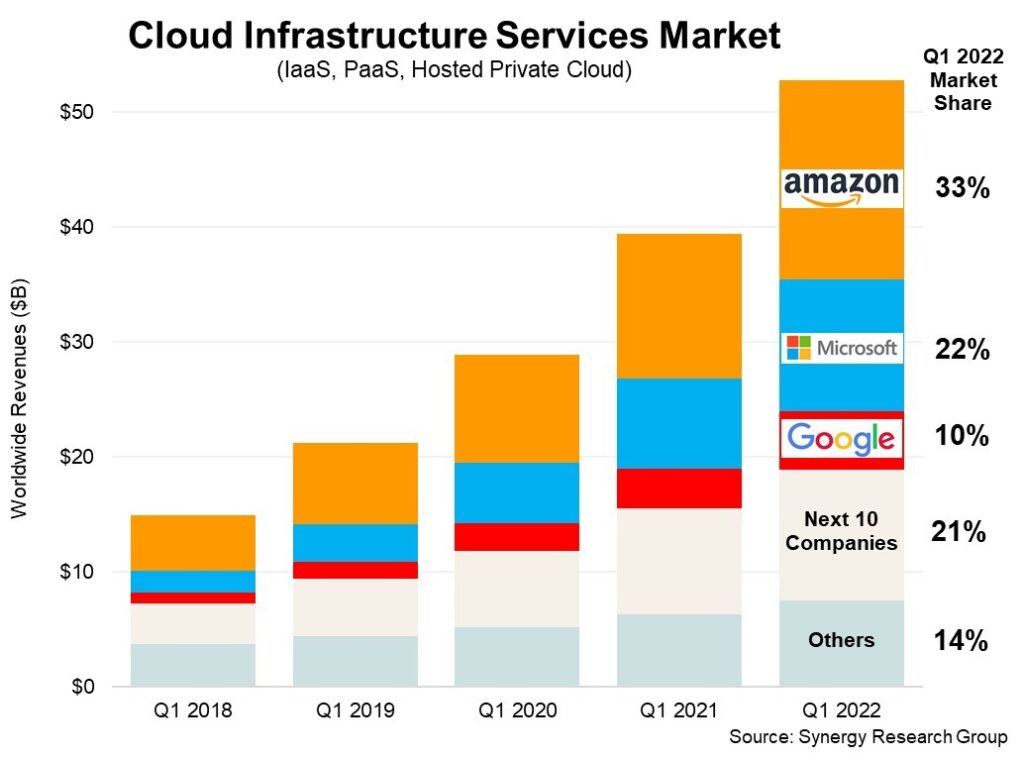
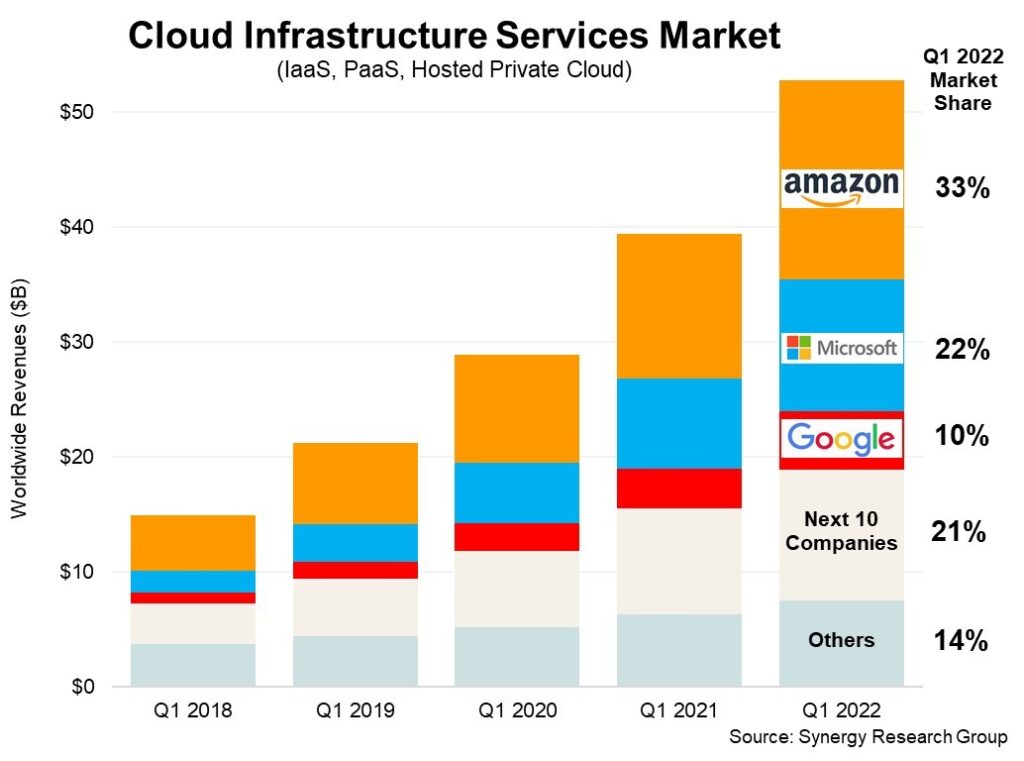
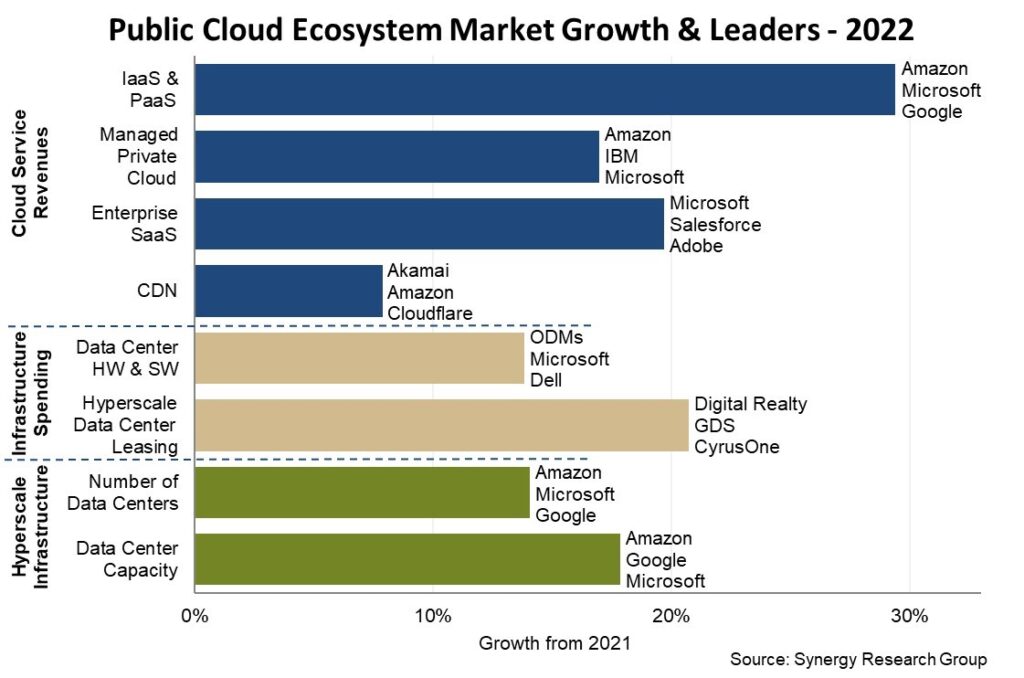
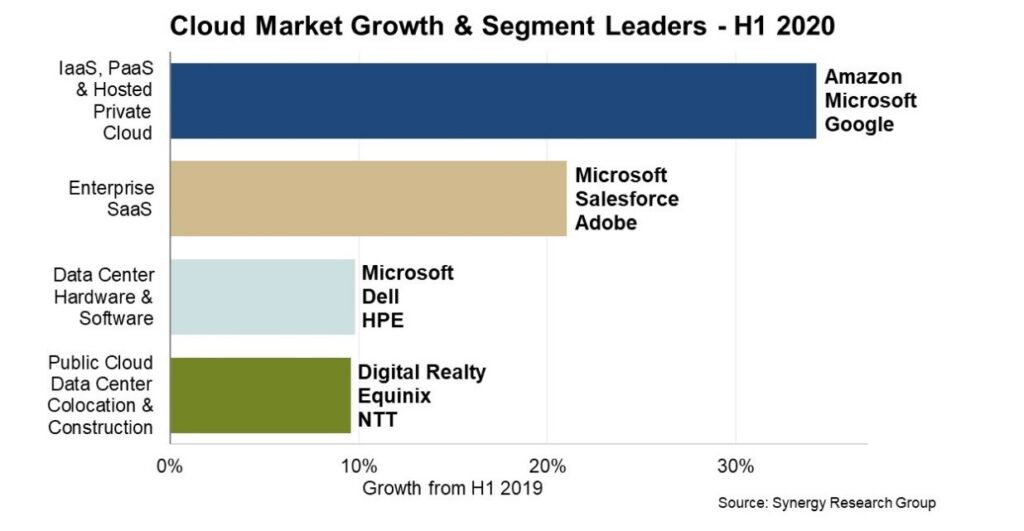
According to a 2020 report by Synergy Research Group. AWS has the largest share of the market. Their infrastructure-as-a-service (IaaS) and platform-as-a-service (PaaS), had 33% of the market share. Microsoft Azure and Google Cloud followed with 18% and 8% market shares. You can read about this research at this link.
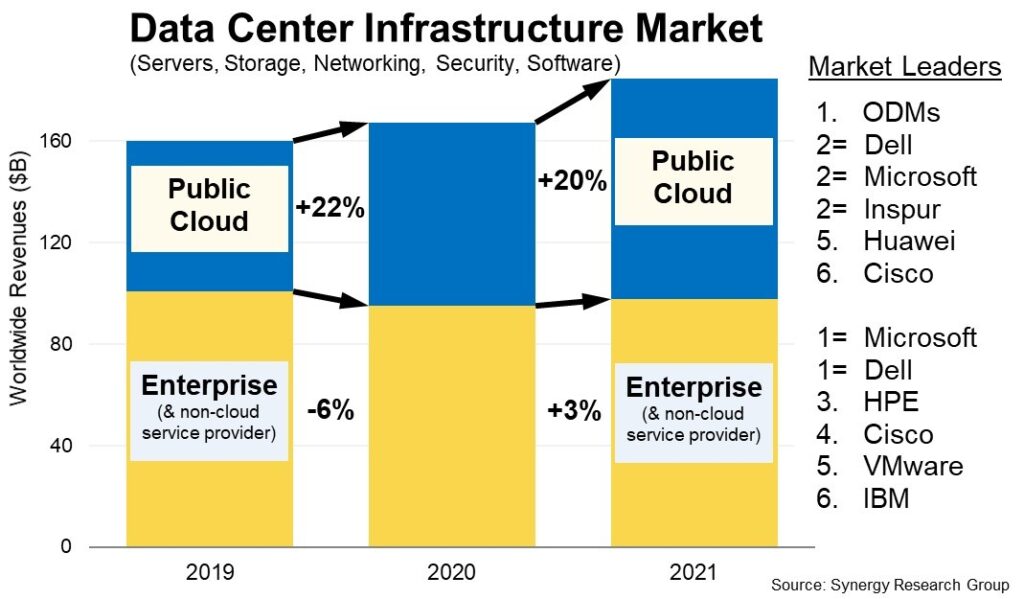
Also, note that large banks have their own private cloud infrastructure. They manage and operate it in-house.
In the end, the best cloud provider for your needs will depend on your specific requirements. So, analyze your options. Also, a trusted advisor or consultant can help you make an informed decision.
- Cloud Migration 101: The Importance of Testing and Training for a Seamless Transition
Testing allows you to identify and address any issues before the migration goes live. This can include functional testing, performance testing, and security testing. Performing these tests verifies that systems and applications are working as expected. They also identify and address potential problems.
Another important aspect of successful cloud migration is training. Your employees should get training on the new systems and applications. This includes new cloud platforms, and new or updated software and tools. Training speeds up new technology usage in day-to-day operations.
The International Data Corporation (IDC) conducted a study. It found that organizations that test and train staff and solutions; enjoy higher returns on investment (ROI). It also indicated an average of 30% faster migration and 25% higher ROI.
In summary, testing and training are essential components of successful cloud migration. Test your systems and applications and train your employees. You will ensure a smooth transition to the cloud and a higher return on investment.
- Cloud Migration for Banks: How to Ensure Compliance and Secure Your Data
When migrating to the cloud, banks in Africa must consider the following.
- Various regulations and compliance requirements specific to the region
- Security of sensitive financial data.
The first example is the Central Bank of Nigeria (CBN) guideline on electronic banking. It requires the security and integrity of electronic banking operations. This includes having a disaster recovery plan and incident management plan. Banks must ensure that their cloud provider is compliant with these guidelines. Also, have the necessary controls in place to protect against data breaches.
The second is the African Continental Free Trade Agreement (AfCFTA). It came into force in January 2021. The AfCFTA requires the free movement of goods, services, and people, across borders. Banks must ensure that their cloud provider is compliant with this agreement. Besides, having the necessary controls to protect the personal data of African citizens.
Additionally, African banks should also adopt these security practices:
- Encrypting sensitive data both at rest and in transition.
- Implementing multi-factor authentication for access to cloud systems
- Monitoring and auditing cloud systems for security vulnerabilities
- Having a robust incident response plan in place for security incidents.
Note that in Africa cloud technology adoption is still in its early stages. Thus, banks are learning to navigate the complexity of regulatory compliance and security. African banking security experts or IT consultants are the best advisors on this.
- Maximizing Cloud Migration Success: The Importance of Monitoring and Optimizing Your Infrastructure
Monitoring ensures systems are performing and you have the resources you need. This includes monitoring key metrics such as
- CPU usage,
- Memory usage
- Network traffic
- Storage usage
Additionally, monitoring cloud infrastructure costs reduce spending on under-utilized resources.
IDC conducted a study in 2020. organizations that track and optimize their cloud infrastructure enjoy many benefits, these include
- Increased system performance
- Reduced costs
- Improved security.
These organizations enjoy a 20% system performance increase and a 30% cost reduction. But, note that the level of cloud adoption in Africa is still low, and the cloud market is new.
Furthermore, Africa lacks the infrastructure and skilled IT professionals for the cloud environment. As a result, monitoring and optimizing cloud infrastructure is a challenge.
- Avoiding Pitfalls: Common Mistakes to Avoid in Cloud Migration for Banks
Here are a few of the most common mistakes to avoid when migrating to the cloud in Africa. All the following mistakes are in this blog.
1. Lack of a clear migration plan
2. Not considering regulatory compliance
3. Failing to test systems:
4. Lack of training for employees
5. Not monitoring and optimizing the cloud infrastructure
IDC conducted a study on these mistakes. They result in 50% longer migration times and 25% higher costs. Furthermore, these mistakes cause system downtimes, data loss, and security breaches.
- Data Migration in Cloud Migration for Banks: Why it’s Important and How to Do it Right
Moving data from on-premise systems to the cloud is complex and time-consuming. But is a must for the success of the migration. Data migration helps to improve data security, compliance, and all operations.
Accenture conducted a study on data migration. It is among the challenging aspects of cloud migration. For over 60% of banks, data migration is the most difficult step. This is because of the complexities of preparing, transferring, and validating data. Additionally, dealing with data quality issues and ensuring data consistency.
To ensure a successful data migration, test the migration to ensure it is seamless. This way data is not lost or compromised.
Another important aspect of data migration is data security. This includes implementing encryption, multi-factor authentication, and other measures for sensitive financial data.
Follow the above practices, for successful data migrations. It also prevents data loss or compromise.
- Steady and Sure: The Importance of a Well-Planned Cloud Migration for Banks
Cloud computing improves operations and customer experience.
One of the other benefits of migrating to the cloud is higher scalability. With cloud computing, banks can add or remove resources as needed. They don’t need to invest in new hardware.
In Africa, there is rapid population growth and economic development. Also, the digital native market had led to increased demand for financial services.
The second benefit of migrating to the cloud is security. Banks in Africa face many unique security challenges. These include a lack of physical security infrastructure and trained personnel. Moving to the cloud can take advantage of the latest security technologies. For example, multi-factor authentication and encryption, protect their customer’s sensitive information.
Yet, migrating to the cloud is not without its challenges. One of the biggest challenges is minimizing the disruption of banks’ operations. Also, infrastructure and personnel are in place to support the move.
To cut the risk of disruption, adopt a phased approach to their cloud migration. This involves moving workloads to the cloud in stages, rather than all at once. Through this approach, you test the waters and address issues before a commitment.
Declouding: Moving Away from the Cloud
Declouding refers to moving away from cloud computing and returning to on-premises infrastructure. It is becoming a popular trend among African businesses.
Although cloud computing has benefits there are reasons why businesses choose to decloud.
One of the main reasons for declouding in Africa is the cost. While cloud computing can be cost-effective in the short term, over time, the costs can add up.
The costs of cloud computing, such as data storage, bandwidth, and maintenance, are high. Additionally, as businesses grow, they need more resources, leading to increased costs.
Another reason for declouding in Africa is data sovereignty. In cloud computing, third-party providers store and manage businesses’ data. This can be a concern for regulated industries, as they have strict data protection laws. By declouding, these businesses regain control over their data. They also follow local regulations.
A third reason for declouding in Africa is security. While cloud computing can offer improved security, it also comes with its own set of risks. Businesses worry about the security of their data housed in a third-party data center. Especially in countries where cybercrime is prevalent. By declouding, businesses take a more proactive approach to security. They store and protect their data to meet their specific needs.
Finally, many businesses decloud because they want to take advantage of new technologies. As technology continues to evolve, businesses’ initial technology can’t support their needs. By declouding, businesses take advantage of new technologies. For instance, edge computing provides more efficient and cost-effective solutions than cloud computing.

This podcast discusses reasons why 37signals decided to move away from cloud services and host their software on their own servers.
- Cloud services have been around for over a decade and many companies are starting to question their use.
- Companies with a predictable base load and a long-time horizon may benefit from hosting their own software.
- Purchasing hardware is now more affordable than ever.
Counter arguments:
- Cloud services offer simplification benefits that may be worth the cost.
- Companies with unpredictable loads may not benefit from hosting their own software.
Work with us
Looking for a reliable partner for your cloud migration journey?
Finsense is here to help with comprehensive roadmaps, support, and expert guidance every step of the way. Contact us today and let our years of experience ensure a smooth transition for your business.
Sources
- Capital One data breach: https://www.cnn.com/2019/07/29/tech/capital-one-data-breach/index.html
- T-Mobile data breach: https://www.csoonline.com/article/3480286/t-mobile-data-breach-was-caused-by-a-misconfigured-firewall-during-an-aws-migration.htmlTop of Form