Top organizations use open source they include Google, Facebook, Microsoft, Amazon, IBM, Twitter, Red Hat, Uber, Airbnb, and Netflix.
Why are banks and hedge funds suddenly into open source. Past practices have indicated that banks are very competitive and cautious of their proprietary data.
Since they handle confidential data, they’ve been expected to keep secrets. For example, in 2009 Goldman Sachs had an employee jailed for allegedly stealing their proprietary software.
However, 8 years later in 2017 Goldman Sachs launched three of its latest open-source projects – Jrpip, Obevo and Tablasco – on GitHub. They also have an in-house language, Legend, that is now open source.
In the creation and use of open-source tech-based companies outperform financial businesses. For instance, Google has 70 open-source projects. The largest of them all is Android which is 75% of what all smart phones use.
Why Organizations Choose Open-Source
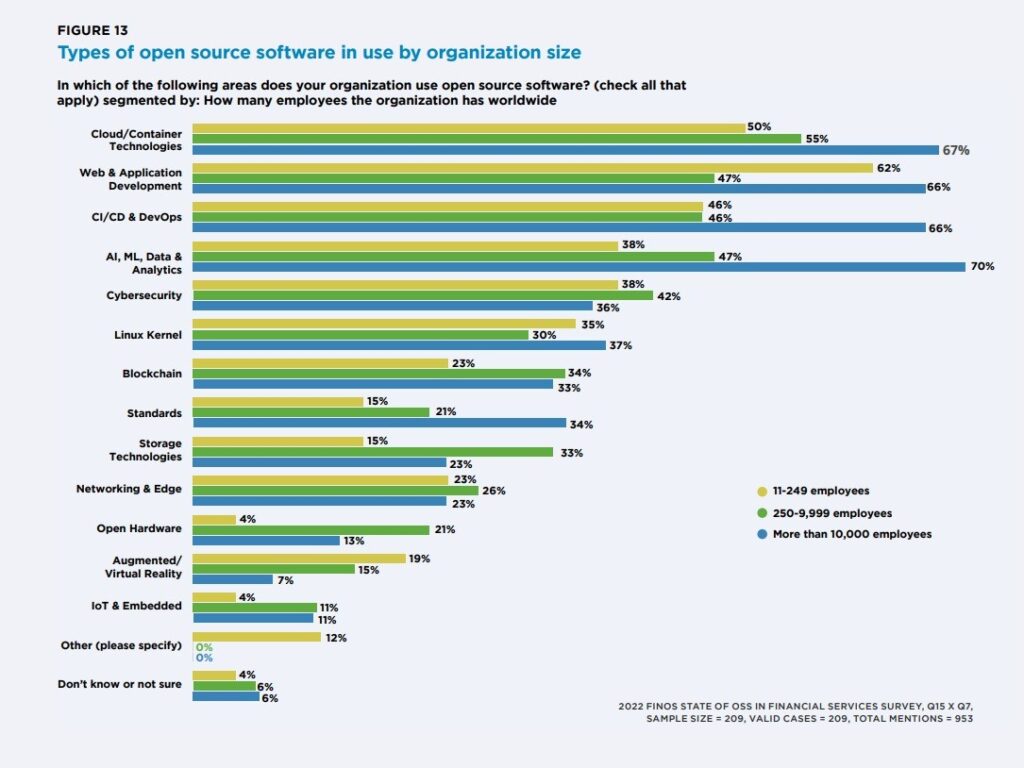
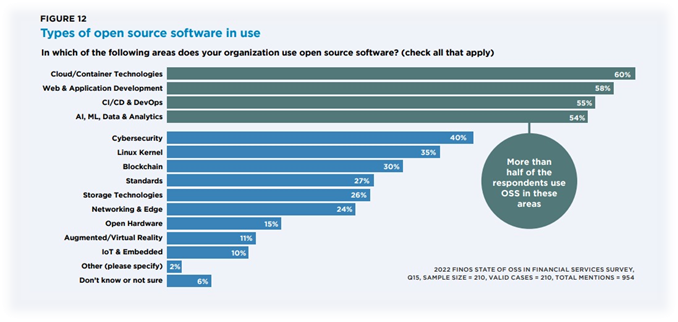
As a result, banks in 2023 will increasingly adopt open-source technology, as they are under pressure to innovate and remain competitive. This shift is driven by a desire to gain access to new and emerging technologies, such as machine learning and blockchain, to improve customer experience and reduce operating costs.
Banks are opting for open-source technology because
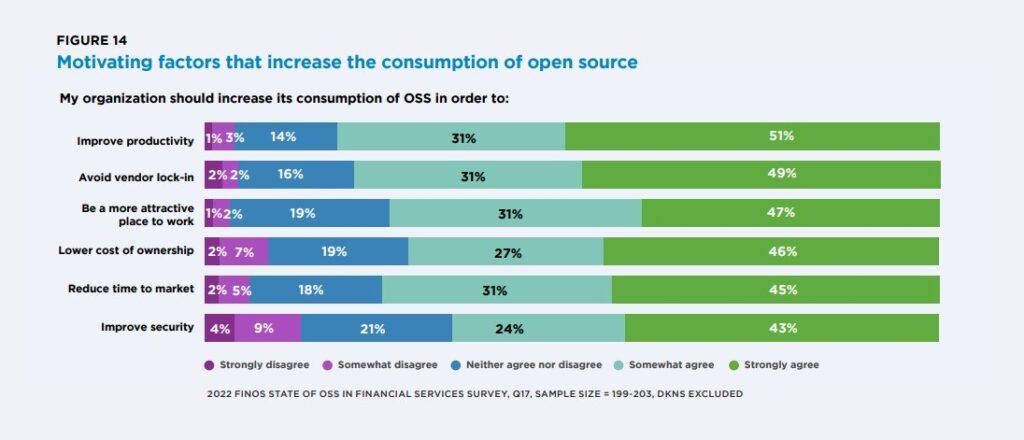
- Cost Savings: Open source saves costs by eliminating the need to pay for expensive proprietary software licenses and reducing development costs by leveraging existing open-source solutions.
- Customization: It can be customized to fit an organization’s unique needs, as opposed to proprietary software which may be more rigid.
- Security: Is more secure because vulnerabilities can be quickly identified and addressed by the community of developers.
- Innovation: Foster innovation by allowing organizations to collaborate and share ideas with others in the community.
- Reliability: Open source has proven to be reliable and stable in mission-critical applications. For example, the Linux operating system is widely used in mission-critical applications such as space missions and stock exchanges.
- Community Support: Open-source communities can guide and assist organizations with their projects, including bug fixes and development advice. The Apache web server project is an example of a project that benefits from a large and active developer community for ongoing support
- Future Outlook: More organizations are likely to adopt open-source solutions, like Red Hat Enterprise Linux, which provides a secure and stable operating system that can be tailored to meet specific business needs.
In addition, open-source software is flexible to customize to specific needs. This allows banks to develop innovative applications that leverage the latest technologies, such as AI and machine learning, to understand customer behavior and anticipate their financial needs.
Real-Life examples of Open-Source Technology Adoption
One example of open-source technology being adopted by banks is the operating system Linux. Banks such as ING, UBS and JPMorgan Chase have implemented Linux powered systems to better manage their IT infrastructure. They use it to:
- Host their IT infrastructure and provide a secure computing environment.
- Develop custom applications, such as mobile banking and digital wallets.
Other open-source projects that are popular in the banking sector include:
- Apache Kafka, an event streaming platform
- Hadoop, a big data analytics platform
Historically banks have been hesitant to adopt open-source software; where software source code is shared and made freely available). With traditional vendors like IBM, TIBCO, Oracle strongly positioned in this industry, the move to open source has been slow.
In recent years, forced by a rapidly changing business, banks are transforming their IT organizations considerably, adopting new technologies and methodologies like Cloud, microservices, Open APIs, DevOps, Agile and Open Source. Because often the above adoptions enforce each other.
The Open-Source movement has reached maturity. While 5-10 years ago, it was associated with computer-nerds, idealists and small start-ups, today it is mainstream. The recent acquisitions of open-source companies by large established corporate tech-vendors is the best proof of this evolution:
- SalesForce bought MuleSoft for $6.5 billion in March 2018
- Microsoft bought GitHub for $7.5 billion in October 2018.
- IBM purchased Red Hat for $34 billion in 2019
At the same time these incumbent tech players are adopting open-source strategies themselves. For example, Microsoft, initially one of the most guarded, has adopted an open-source strategy, since Satya Nadella became CEO in 2014. Examples of its open-source technologies include:
- Edge: The Edge browser is switching to the Google based open-source chromium platform
- .NET framework: the full .NET framework was open-sourced on Git-Hub
- Windows 10: built on open-source Progressive Web App technology
- Windows 11: analysts speculate that the NT kernel would be (gradually) replaced by the Linux kernel
- Azure platform: the most used operating system on Microsoft Azure is not Windows Server, but rather Linux
- Open-source contribution: Microsoft has become the largest contributor to open source in the world. It is more active than the second most active contributor, Google. There are 20,000 Microsoft employees on GitHub and over 2,000 open-source projects
The Different Stages of Open-Source Adoption
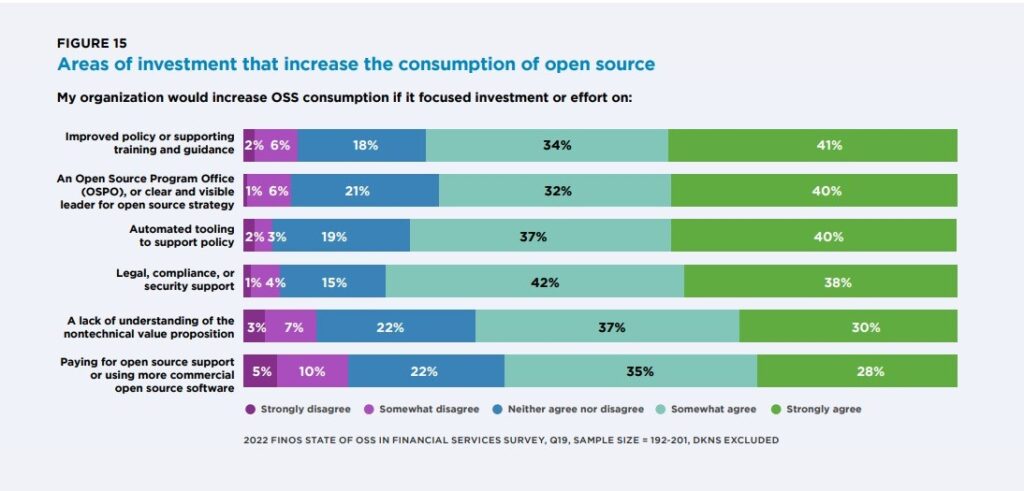
Open-source software has many benefits for banks, but it requires a cultural shift in the whole organization, which takes time and intensive change management.
Banks can start adopting open-source software in different ways. They can start by using open-source software where possible, either as full solutions or as components they combine to build custom applications.
As they become more familiar with open-source software, banks can start contributing back to the community by identifying bugs and implementing valuable features. By doing so, banks improve their corporate image and benefit from future testing and extensions by the community.
The final step is to open the bank’s existing proprietary software, which is the most complex and time intensive.
First, banks fear their code will be scrutinized in public, resulting in a brand risk and potentially exposing security issues. Additionally, some bank leaders may fear giving away competitive advantage.
Second, depending on the kind of open-source software. How complex is it? Banks should first gain experience with low-level abstraction open-source software, like:
- Databases (MySQL, Mongo DB, Cassandra and Postgres),
- Middleware (WSO2, Kafka, Apache Camel, Envoy, Istio)
- Operating systems (Linux and Kubernetes)
Gradually they can move up the stack to higher level of abstractions, like:
- Business process (jBPM)
- Task management tools
Finally, they can use also open source for the financial core processes. These include, Cyclos, Mifos X / Apache Fineract, MyBanco, Jainam Software, OpenCBS, OpenBankProject, Cobis, OpenBankIT, Mojaloop).
Contributing to Open-Source
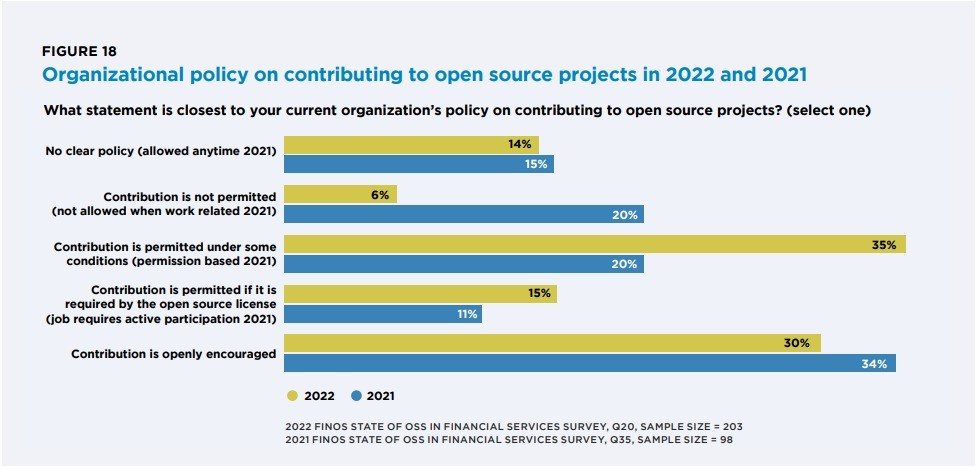
Ultimately the banks’ software should have at its core open-source software, except for solutions exclusively offered via SaaS.
Many banks already use open-source software and prefer it over proprietary software. More banks are contributing to open-source projects or open-sourcing their own software. Some examples of such banks include:
- Capital One’s, one of the largest credit card companies in the US, has been on a digital transformation journey over the past 6 years.
- Goldman Sachs recently open sourced its proprietary data modeling program Alloy
- J.P. Morgan Chase released code on GitHub for multiple initiatives; its Quorum blockchain project.
- Deutsche Bank open-sourced multiple projects, like Plexus Interop (from its electronic trading platform Autobahn) or Waltz (IT estate management
The Dilemma of Open-Sourcing In-House Software
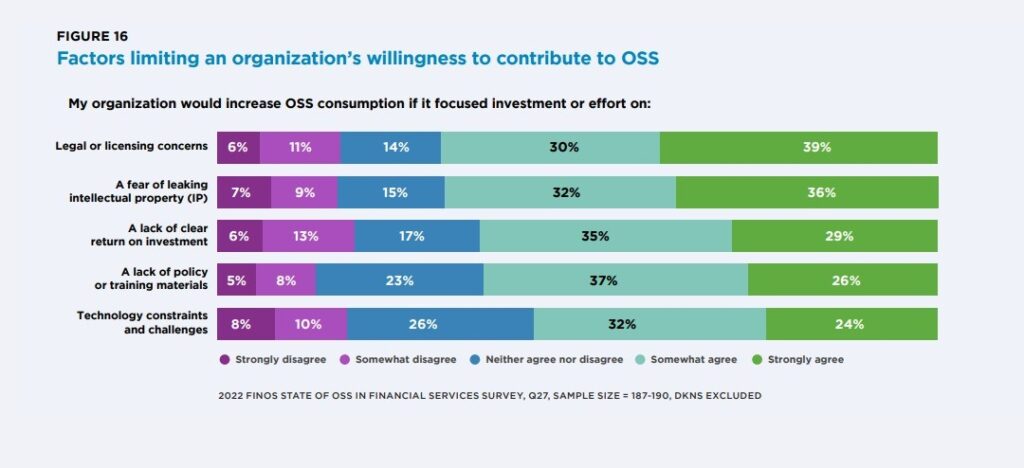
The move of some banks to open-source proprietary software seems strange at first sight, as intelligent software has become the competitive edge of any bank. Nonetheless banks have a lot to gain in using (adopting) open source and contributing to it:
5 Benefits of using open-source software:
- Lower costs: avoid the exuberant annual software license costs paid to software vendors.
- Reduce time-to-market: allowing developers to bolt together pre-existing modules rather than having to create them all from scratch, allows to considerably reduce development time.
- Easily customizable: open-source software can be customized, allowing to provide the golden means between buying a software package from a vendor (quick time-to-market, but limited customization possibilities) and internally custom-built software.
- No vendor lock-in
- Lower learning curve for new joiner
7 Benefits of Contributing to Open-Source Software:
- Good for corporate image through giving back to the community.
- Transparency: open-source software is intrinsically more secure than proprietary software, where the code is kept a secret.
- Easier hiring of resources, as IT resources like to work on open-source and good potential candidates can be identified by looking at public commits of externals to the bank’s open-source projects
- Motivation: often IT resources at banks feel a lack of social commitment. Contributing back to open sources can give them a feeling of pride and giving back to community.
- Cultural accelerator: open-source communities promote collaboration, almost always remote and often across different time zones and cultures. Collaborating in such an environment will make the bank IT department better and more adapted for future evolutions.
- Gain from testing and extensions built by contributors outside the bank
- Facilitates collaboration between different banks on shared concerns like KYC (Know Your Customer) and AML (Anti-Money Laundering)
5 Fears of Making In-House Software Open-Source
Even though open source has many advantages, there are still some banks that are hesitant to use it. These banks are especially hesitant to contribute to open source or share their own software. Here are some reasons:
- Contractual and legal: Various types of open-source software license models exist which can make it challenging for large banks to comply with all the terms and conditions. But tools like FOSSA, DejaCode, WhiteSource, Code Janitor help monitor and follow-up the compliance on open-source licenses.
- Support: Banks worry about a lack of support when using open-source tools. However, many open-source tools offer corporate support. If not, the bank IT teams should engage with the open-source community to resolve an issue.
- Compliance and security: There are risks when publishing source code on the internet that criminals can find loopholes in the code. While open-sourcing code ultimately leads to more secure software.
- Losing Competitive advantage: Most internal banking software is commodity software that doesn’t provide any differentiation. Open sourcing these applications can free up resources to work on real value-added services.
- Brand risk: Banks are concerned that open-sourcing bad software can harm corporate branding
How Does Open-Source affect FinTech
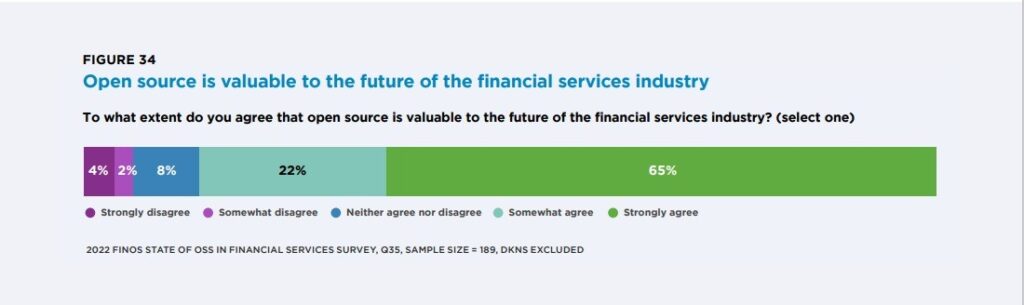
If banks start using a lot of open-source software, will FinTech’s new software services offer to banks, fail?
Fortunately, fintech has already moved from an annual license model to newer partnership models. Using cloud technology and Open APIs has made it hard to justify annual licenses.
Partnership models are now used instead of software license costs. These include:
- PaaS (Platform as a Service), SaaS (Software as a Service) and Baas (Business as a Service) models
- “Open core” models (also called Dual licensing). Here, the core of the software is delivered for free and open source. However, the tooling for large corporations are license based
- Support model: pay a party for access to a support desk and providing updates on when new versions should be installed
- Service model for profits; training services, implementation services, customizations to the open-source software at request of the banks.
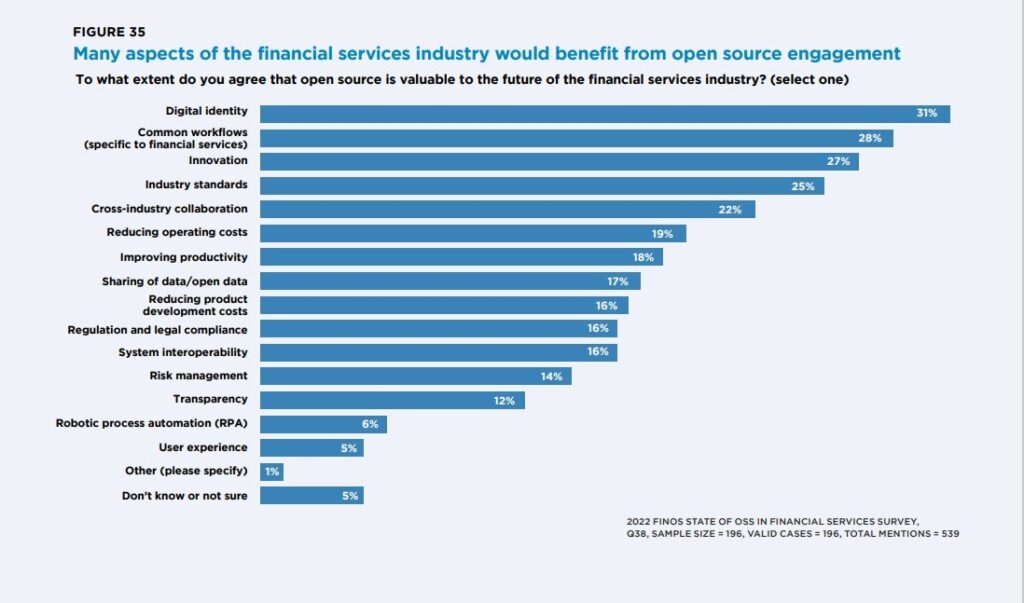
Making an open system of collaboration between FinTech and banks will lead to better services for everyone. Banks should understand that technology is important for their business.
They should learn from the big technology companies by hiring the best people, using existing software, and supporting quick changes with DevOps and Agile methods. Banks can use open-source strategies to achieve this goal.
References:
]]>