In this article, we will explore the current state of the African tech talent landscape. Is scarce or limited?
It’ll also look at the potential for growth and development within the industry. In addition, the opportunities for tech professionals looking to make a difference in Africa.

The Growth of The Tech Industry in Africa
The tech industry in Africa has grown in recent years. The industry has many successful startups and a growing pool of investment.
According to data from the World Bank, the number of tech startups in Africa was 16,000 in 2018 from 2,500 in 2010.
Many factors encouraged this overnight growth. They are as follows:
- The increasing availability of internet access.
- The growth of mobile technologies.
- The rising demand for digital solutions in various sectors.
Investment in the tech industry in Africa has also seen significant growth. According to data from the African Private Equity and Venture Capital Association (AVCA).
The total venture capital investment in African tech companies was between $3.8- $4.7 Billion in 2022. This increase is from $2 billion in 2019 and around $500 million in 2015.
Investors recognize the potential of the African tech market and its opportunities. Projections for 2023 fintech funding is up to $6.8 billion.
The tech industry in Africa is a dynamic and growing sector. It has made a significant impact on the continent’s economic and social development.

Successful Tech Professionals in Africa: Backgrounds and Achievements.
There are many successful tech professionals in Africa. These pioneers have achieved a lot in their careers. Also, are making a positive impact on the tech industry in the continent. Here are the profiles of a few of these individuals:
Rotich is a Kenyan tech entrepreneur and innovator. Known for her work in the field of open data and technology for development. She is the co-founder and Executive Director of Ushahidi. Ushahidi is a leading platform for crisis mapping and information-gathering.
Many disaster and conflict situations around the world use Ushahidi. Rotich is also a co-founder of BRCK. A company that produces rugged and portable internet devices. For areas with unreliable or non-existent internet infrastructure.
Yacoubi is a Moroccan tech entrepreneur and investor. Known for his work in the field of digital finance. He is the co-founder and CEO of Inwi. A leading telecom operator in Morocco.
Also, he is the founder and CEO of Mena Venture Investments. A venture capital firm that focuses on investments in emerging markets.
Yacoubi has received many awards and recognitions. For his contributions to the tech industry in Africa and beyond.
Thakkar is a Ugandan tech entrepreneur and philanthropist. Known for his work in the field of financial inclusion and entrepreneurship.
He is the founder and CEO of Mara Group. A conglomerate of companies that operate in financial services, technology, and real estate.
Thakkar is also the co-founder of the Mara Foundation. A charitable organization that works to promote entrepreneurship and education in Africa.
Chinery-Hesse is a Ghanaian tech entrepreneur and innovator. Known for his work in the field of software development and artificial intelligence.
He is the founder and CEO of Softech. A software company that has developed a range of innovative products and services. Such as an AI-powered chatbot and a cloud-based banking platform.
Herman is also the founder of a Global Entrepreneurship Forum for the tech industry. A network of entrepreneurs and investors to rally for collaboration and innovation
A Nigerian entrepreneur and venture capitalist who founded the African Business Angel Network, an organization that works to promote the development of early-stage technology companies in Africa.
He is an expert in AI and has made contributions to the tech industry in Africa. As such, he has received many awards and recognitions for his work.
Tech education and training programs in different countries on the continent.

Access to tech education and training programs in Africa depends on socio-economic factors. These factors include:
- Economic development.
- Government, and stakeholder priorities.
- Tech skills demand in the local market.
Tech education and training programs in different countries in Africa also vary. In general, countries with well-developed education and technology focus systems have more programs.
Middle-income countries like South Africa, Egypt, and Morocco have more tech education programs. These programs are in primary and secondary schools, vocational training institutes, and universities.
The focus topics are computer science, software engineering, and data analysis. Students get the skills and knowledge they need to pursue careers in the tech industry.
In comparison, low-income countries like Burundi, and Chad have under-developed educational systems. Hence fewer tech education and training programs are available.
In these cases, individuals seek out alternative ways through online courses or self-study. Even then, internet unavailability is another bottleneck in these countries.
Companies That Have Successfully Sourced and Retained Tech Talent in Africa.
Andela is a tech company for businesses in the US and Europe. It helps them hire and manage remote software developers from Africa.
The company has a rigorous selection process. It identifies top talent, trains them, and supports them to succeed in their careers.
Andela have been successful in retaining tech talent. They provide competitive salaries, benefits, and professional development opportunities to its employees.
Flutterwave is a fintech in Africa. It provides payment infrastructure and financial services to businesses and individuals.
The company has a diverse team of tech professionals from across the continent. They build innovative solutions to various challenges in the financial industry.
Flutterwave has retained tech talent by providing them supportive and collaborative work environment. They also offer competitive compensation and benefits packages.
M-Kopa is a tech company. They provide pay-as-you-go solar energy systems to households in Africa.
The company has a team of tech professionals who develop and maintain solar systems. M-Kopa retains tech talent by providing a purpose-driven mission. Also, a culture of innovation and collaboration.
Jumia is an e-commerce company that operates in several African countries. The company has tech professionals who build and maintain its platform and infrastructure.
Jumia retains tech talent by providing a dynamic and fast-paced work environment. They also offer opportunities for career advancement and personal development.
uLesson is an ed-tech company in Africa. They provide online learning programs to students.
The company has tech professionals who develop and maintain the platform and content.
uLesson retains tech talent by providing a supportive and collaborative work environment. They also offer competitive compensation and benefits packages.
Salary and benefits packages for tech professionals in Africa
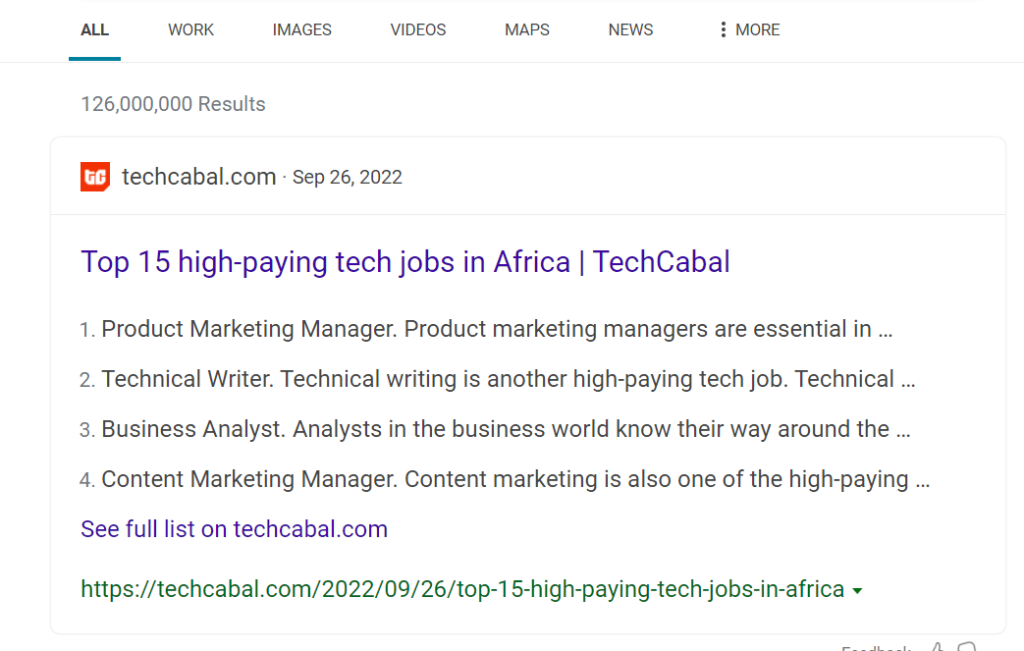
Technology professionals’ salaries in Africa are not comparable to those of other regions. Many factors influence these packages, and they include:
- The country or region.
- Their level of education and experience.
- Their specific skills and expertise.
- The demand for their skills in the local job market.
The average salary for a tech professional in Africa is around 30-40% lower than in developed countries. This data is from recent research by IT industry research firms and reports.
Tech pros in Africa can earn well with global firms. However, pay and benefits vary by employer and location. Keep this in mind when considering opportunities in Africa.
Insights from industry leaders and experts
Industry leaders and experts agree that the tech sector in Africa is growing. It also has significant potential for the future. Some of the key insights that these leaders and experts shared include:
- Africa is a key market for tech companies:
Africa has many opportunities for tech companies. It has a large population, a rising middle class, and high mobile and internet usage. It means companies can make products and services that fit what people want.
- Tech can drive economic and social development:
Tech has the power to change Africa’s future! Industry leaders and experts know that it can drive economic and social development. Think about it, with tech, people can access information, education, and other resources. It empowers individuals and communities. In the end, it opens doors to new opportunities for growth and progress.
- The tech ecosystem in Africa is evolving:
The African tech market is growing. More people and companies are recognizing its potential. Industry leaders and experts also acknowledge this fact. There are more startups, investors, and stakeholders joining the sector.
The tech sector in Africa is dynamic and exciting with potential for growth and impact. Africa is a key player in the global tech industry and drives innovation and development. As a result, the African tech industry will continue making an impact in the global tech industry.
The diversity of the tech workforce in Africa
Limited data exist on diversity in Africa’s tech workforce. The industry faces challenges like a lack of diversity and inclusion. Underrepresentation of women and minority groups is also common.
Studies show that minority groups face barriers to education and employment opportunities. According to ILO, women make up only a third of the tech workforce in Africa, lower than the global average of 40%. Data on racial diversity is also limited.
Furthermore, the industry acknowledges that certain racial and ethnic groups dominate. Although, limited data is available on the racial diversity of the tech workforce. Promoting diversity and inclusion is key for a sector that serves all backgrounds.
Data on the demand for tech talent in different sectors and industries in Africa.
The demand for tech talent in different sectors and industries in Africa can vary. Some sectors and industries in Africa have a high demand for tech talent. They include:
- Fintech: The fintech industry in Africa is growing. They demand for tech talent in mobile payments, digital banking, and financial inclusion.
- E-commerce: The e-commerce industry in Africa is growing. It demands tech talent to build and maintain online platforms and infrastructure.
- Healthcare: The healthcare sector in Africa is facing challenges. It demands tech talent to develop innovative solutions.
- Education: The education sector in Africa is facing challenges. It demands tech talent to develop online learning platforms and other solutions.
As companies recognize the importance of technology for innovation and progress. The demand for tech talent in different sectors in Africa will be insatiable.
The challenges and opportunities faced by tech professionals in Africa
Tech professionals’ careers face a range of challenges and opportunities in Africa. Some of the key challenges include:
- Limited access to education and training: Prevent opportunities to develop skills and knowledge to succeed in tech careers. The access limits are because of the cost, availability, and quality of instruction.
- Limited access to resources and support: This prevents access to the resources and support to succeed in tech careers. These resources are equipment, software, other tools, mentors, advisors, and other support networks.
- Limited job opportunities: It is hard f to find jobs in countries with lower GDPs and demand for tech skills. This makes it hard for tech professionals to find jobs that match their skills and interests.
Despite these challenges, there are also many opportunities for tech professionals in Africa.
- Growing demand for tech skills: More companies and organizations are adopting technology to drive innovation and progress. As a result, tech professionals can find employment and advance their careers.
- Opportunity to make a positive impact: Tech skills and expertise can help Africa solve its challenges. This is rewarding for tech professionals who want to make a difference. Working in Africa also allows them to learn and grow in their careers, while making a positive impact.
- Opportunities to learn and grow: Tech professionals in Africa can learn and grow. They do so by gaining experience, building networks and taking on new challenges. This will help them to develop their skills.
Work with us
Looking for top-notch tech talent for your ongoing technology projects?
Partner with us and Gebeya to access a team of experts including software engineers, data scientists and more. Contact Finsense today and stay ahead of the curve.
Sources
“The State of the African Tech Startup Ecosystem” by Partech: https://partech.com/the-state-of-the-african-tech-startup-ecosystem/
“The Future of Tech Talent in Africa” by World Economic Forum: https://www.weforum.org/agenda/2021/05/future-tech-talent-africa-digital-skills-jobs-education/
“Investing in Africa’s Tech Talent” by McKinsey & Company: https://www.mckinsey.com/industries/high-tech/our-insights/investing-in-africas-tech-talent
“AI in Africa: the future of technology on the continent” by The Guardian: https://www.theguardian.com/technology/2021/jan/05/ai-in-africa-the-future-of-technology-on-the-continent
“The State of the African Tech Ecosystem” by Disrupt Africa: https://disrupt-africa.com/2019/02/the-state-of-the-african-tech-ecosystem-2019/
]]> database can optimize your business’s virtualised computing
  environment. Improved agility and innovation can help your business unlock greater value.
Source : @forbes
]]>Containers use something called ‘Virtualization’. But, what is Virtualization?
Well, virtualization is a concept that lets a single machine be divided into multiple machines virtually. These virtual machines run in isolation from each other.
It enables a container to work with just the source code along with basic dependencies and leverage the host machine’s resources to be small, fast, and portable.
Containers also enable the micro-services approach which provides advantages to businesses.
They enable easy management of code, better scalability, quicker time to market, and are more fault-tolerant.
Moving from VMs to containers also lets you take advantage of Cloud Native architecture which is fast becoming the norm for all the leading businesses.
We at FinSense can help you with containers and move towards cloud-native architecture!
]]> ]]>
]]>They went all the way from monolith to microservices.
Their objectives were clear:
Centralized management of services + Enhanced Security.
To achieve these, they used a lot of tools available for Kubernetes.
Kubernetes has a lot of room for customization – So they
created their own custom control panels for centralization.
For other enhancements, a Service mesh-like Envoy was used.
It was used for translating & forwarding each network packet.
Envoy’s Mutual TLS features were also utilized for security.
Snap’s example shows the value that can be added by moving
workloads into Kubernetes. Other teams are moving in too.
If you are looking to move into Kubernetes. We can help!
Send us a hi at info@finsense.co.ke!
]]>